← Explore
1 / 9
🔍 EXPLORE
How Can a Gecko Walk on Walls?
Have you ever seen a gecko run up a wall — or even across the ceiling — without falling?
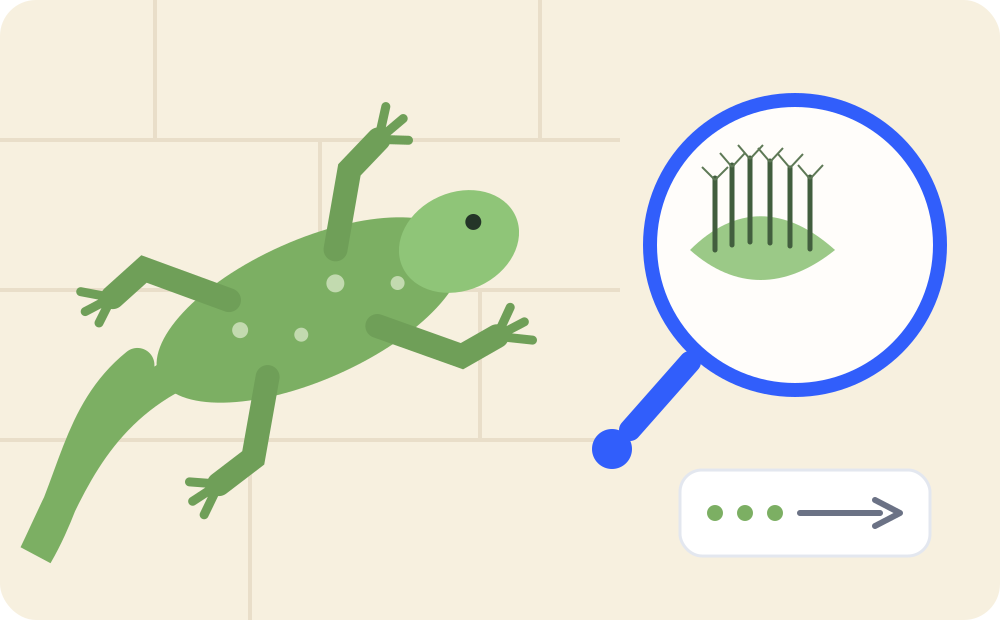
Look closely: the picture shows a simplified close-up of what is under a gecko's toe.
It isn't glue
A gecko does not need glue to stay on the wall. Under each toe are millions of extremely tiny hairs. These hairs are so small that we cannot see them clearly with our eyes.
How does it stay on the wall?
The close-up is simplified, but it shows the idea: lots of tiny structures touch the surface.
When those tiny hairs get very close to a wall, they are gently attracted to the surface. One tiny attraction is very weak. But when millions of them work together, they can hold up the gecko.
Many tiny pulls can add up to something strong.
How does it let go?
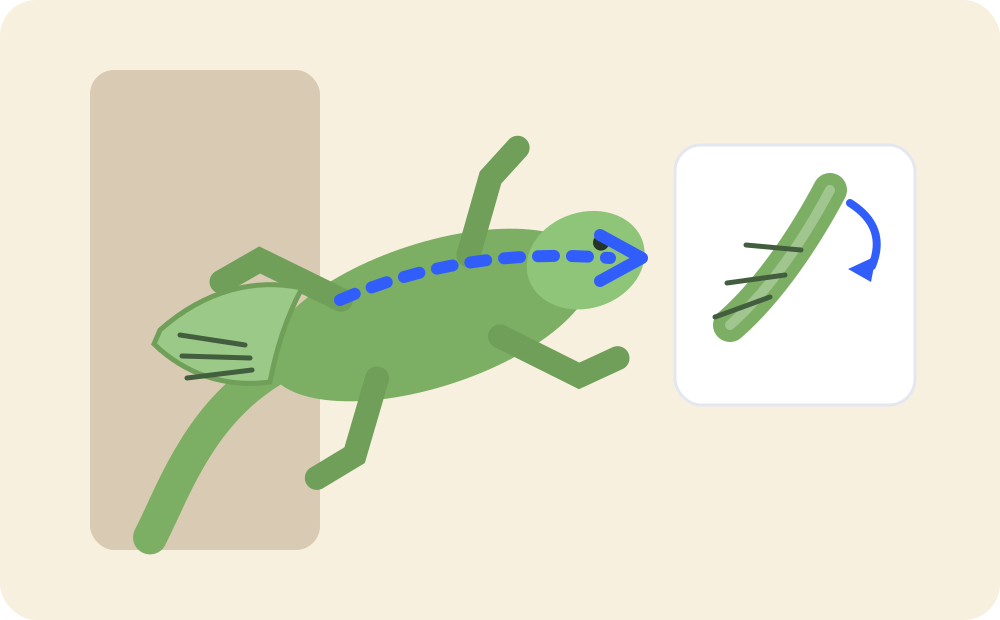
Instead of pulling straight off, the gecko changes the angle of its toes and peels them away.
The gecko can let go very quickly. It changes the angle of its toes and peels them away from the wall, a little like peeling tape from one side.
Scientists call the tiny attraction van der Waals forces. You do not need to remember that difficult name yet.
The big idea: many very small forces can become strong when they work together.
QUICK EXPLORE · 1
What helps a gecko stay on a wall?
QUICK EXPLORE · 2
Why can the tiny hairs hold up the gecko?
QUICK EXPLORE · 3
How does the gecko let go of the wall?
🧠 THINK MORE
One tiny hair is too weak to hold even a grain of rice. How can millions of tiny hairs hold up a whole gecko?
🌟 OPTIONAL THOUGHT
Can you think of something else where many small things working together can become powerful?
There is no single correct answer. Just share one idea.
🎉 You explored something new!
A gecko can climb because millions of tiny attractions work together. The big idea is useful beyond geckos too: many small things can add up to something powerful.